Moving the conversation about clinical notes beyond portal access toward dignity, understanding and shared power.
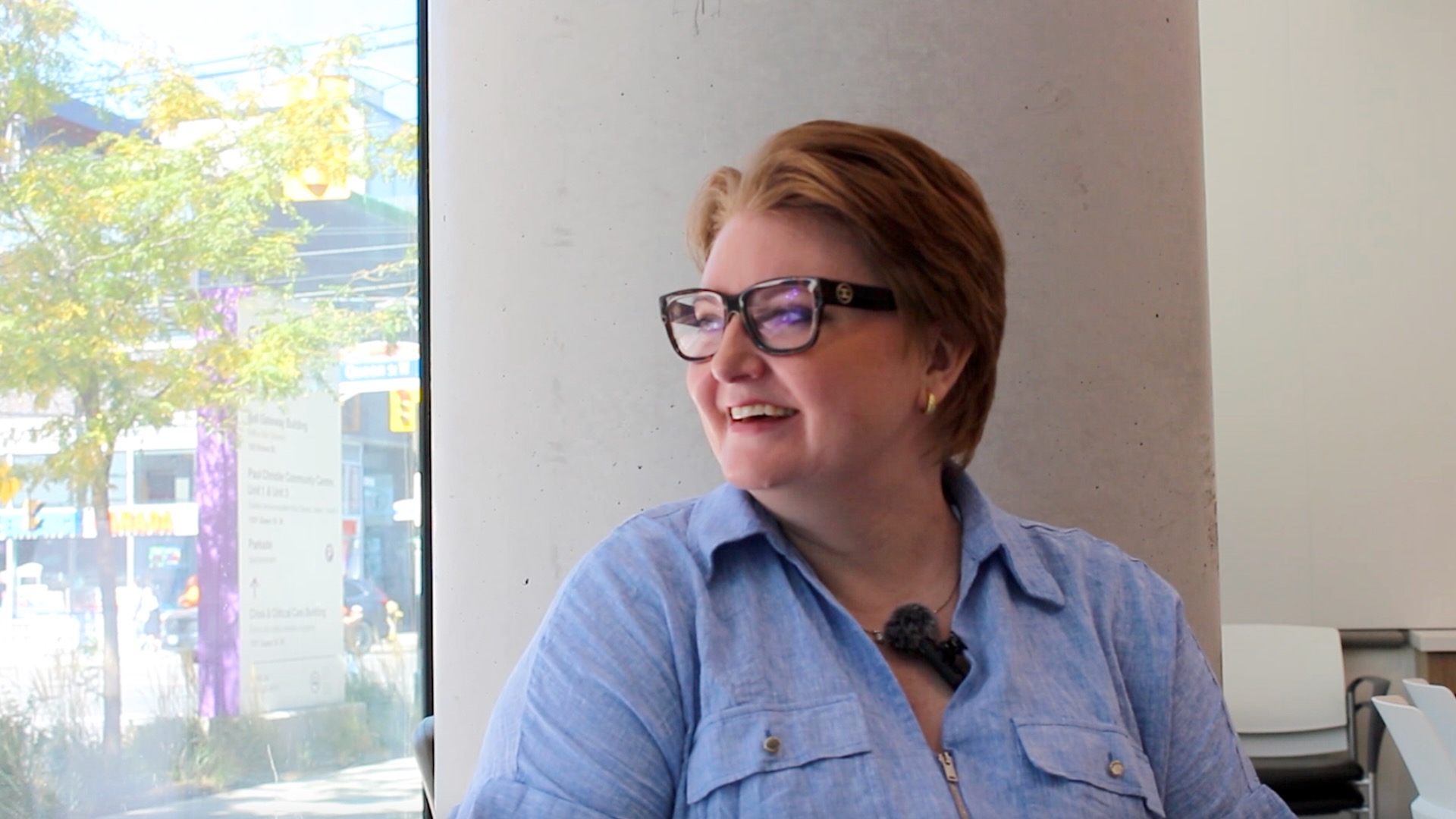
Emily Foucault filming a testimonial video at CAMH’s campus at 1051 Queen Street West in Toronto, 2025. Photo courtesy of CAMH.
01
Context
What shaped the work
Patients often have limited or inconsistent access to the clinical notes written about them. Even when notes are available, they may be incomplete, difficult to understand or written in stigmatizing language.
In mental health care, where notes can contain especially sensitive information, experiences of stigma, dismissal or trauma can make transparency central to trust.
02
Emily's role
Where Emily contributed
Emily contributed as a CAMH patient advisor, lived-experience collaborator, co-author and speaker. She brought the perspective of someone navigating complex care and helped turn broad questions about transparency into practical, real-world concerns.
03
Collaborative process
How the work happened
Emily worked as a thought partner with CAMH's Digital Mental Health Lab, researchers, clinicians and other patient advisors. Lived experience was used to ask different questions, identify risks and inform testimonial and knowledge-mobilization materials—not simply to endorse decisions already made.
04
Contribution
From insight to action.
Raised questions about trust, power, accuracy and restricted access.
Distinguished access to information from meaningful, understandable transparency.
Advocated for person-centred and trauma-informed clinical documentation.
Contributed to patient testimony and knowledge-mobilization work.
Presented at UHN's PiPER Research Day.
Wrote publicly about OpenNotes and clinical transparency.
05
Output
What resulted
The work contributed to a practical implementation toolkit for clinicians in Canadian mental-health settings, patient testimonials, public presentations and writing that connects note access with inclusive communication.