Changing more than words: helping CAMH turn inclusive language from an abstract principle into practical, organization-wide guidance.
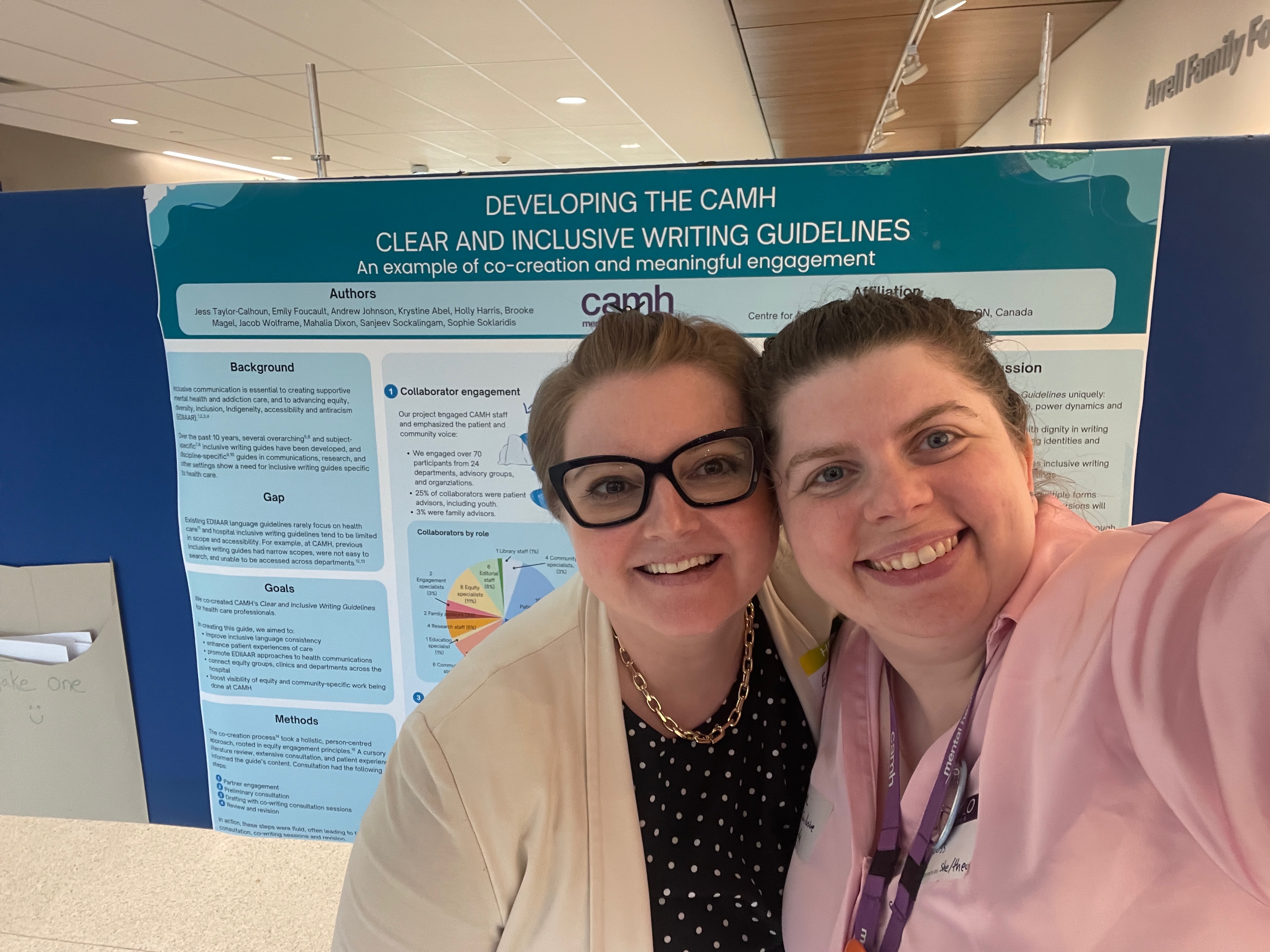
Emily Foucault and Jess Taylor-Calhoun presenting at CAMH Research Engagement Day in Toronto, 2026.
01
Context
What shaped the work
Inclusive communication is essential to safe, equitable mental health and addiction care. CAMH needed practical guidance that could help people write about patients and communities with dignity while accounting for trauma, stigma, accessibility, identity, power, Indigeneity and antiracism.
The work began with the understanding that inclusive writing is not simply about preferred terminology. Language can influence whether people feel respected, represented and safe within health care.
02
Emily's role
Where Emily contributed
Emily served as a patient advisor and co-lead writer, combining more than 15 years of communications experience with lived experience navigating health care. She also wrote the guide's foreword and contributed to sections where she held direct lived expertise.
03
Collaborative process
How the work happened
More than 70 CAMH staff, patients and community members contributed through partner engagement, consultation, co-writing and revision. Rather than arriving with finished copy for approval, the team asked what people had experienced as harmful and how they wanted to be written about and spoken to.
04
Contribution
From insight to action.
Helped shape the guide's overall approach, structure and voice.
Translated inclusive-writing principles into clear, usable guidance.
Centred dignity, trauma-informed communication and lived experience.
Helped identify language that can reinforce stigma, power imbalances or medical dismissal.
Contributed writing on rare disease, disability, addictions and effective writing practices.
Presented and wrote about the project's wider significance.
05
Output
What resulted
The project produced CAMH's Clear & Inclusive Writing Guide, a practical resource intended to support respectful, person-centred communication. The co-creation process was also documented through conference presentations and an award-winning poster.